
Used Equipment Market for Mature Nodes: The Alternative Capacity Path
A semiconductor factory does not always need the newest equipment to produce a commercially important chip. Analog devices, power-management circuits, sensors, microcontrollers, and other established products often depend on manufacturing capabilities that have been refined over many years. For these applications, the right tool is the one that delivers acceptable performance reliably—not necessarily the latest model.
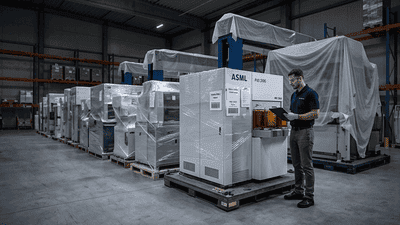
That distinction gives the used equipment market a strategic role. Refurbished systems can support targeted expansions, replace aging machines, and help manufacturers avoid paying for capabilities their processes do not require. They can also create a route to capacity when suitable new equipment is difficult to obtain on the desired schedule.
The central consideration is fitness: whether a specific system can perform the required process, integrate into the production line, and remain supportable throughout its intended operating life. A low purchase price matters only after those questions have credible answers.
Mature Nodes Are Not a Single Equipment Market
The phrase “mature node” describes a broad range of manufacturing technologies, not one standard factory design. Different products require different combinations of lithography, deposition, etching, cleaning, implantation, measurement, and testing.
Wafer diameter adds another dimension. A 200 mm production line and a 300 mm line can serve established applications while relying on different equipment platforms and handling arrangements. Diameter should not be treated as a direct substitute for process-node classification.
This diversity explains why the secondary market cannot be assessed through one headline inventory number. Available equipment may be plentiful overall while a particular configuration remains scarce.
From a buyer’s perspective, the starting point is the intended process flow. The search should identify required capabilities and compatible systems before comparing prices. Otherwise, an apparently attractive purchase can become an expensive engineering project.
Where Used Equipment Creates the Most Value
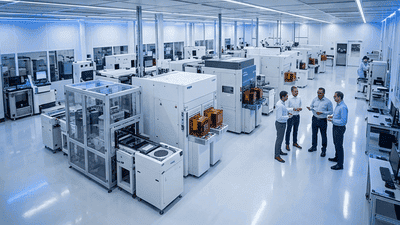
The strongest opportunities often involve a defined production need rather than an attempt to assemble a complete factory from whatever happens to be available.
An existing fab may need additional capacity at one deposition step. Another may want a replacement for a difficult-to-maintain cleaning system. A research facility may need access to a proven process without committing to a new production platform.
Secondary equipment suppliers can support these needs through sourcing, reconfiguration, refurbishment, installation, qualification, and continuing service. The commercial offering therefore extends well beyond transferring ownership of an old machine.
For the factory manager, the appeal is practical: add useful capability without redesigning the entire operation. For the investor, the important distinction is between buying inexpensive hardware and acquiring productive capacity.
As-Is, Refurbished, and Requalified Are Different Propositions
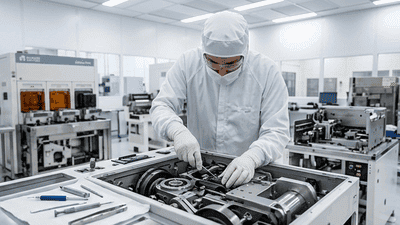
Used equipment is sold under different conditions. An as-is system may provide little assurance beyond its identified configuration and physical availability. A refurbished tool may have undergone repairs, replacement of wear items, calibration, and testing.
Those descriptions are not interchangeable, and refurbishment standards can vary among providers. Buyers need to establish exactly what work has been completed and which performance claims are supported.
Process qualification is another step. A system can function mechanically and still require evaluation before it is suitable for the customer’s manufacturing application.
The contract should therefore define the deliverable. Is the buyer receiving a transportable machine, an operational system, or equipment demonstrated against agreed acceptance criteria? Clear scope prevents disagreements and makes competing quotations more meaningful.
The Purchase Price Is Only the Beginning
A used tool’s acquisition price can be attractive while its total deployment cost is not. Removal, decontamination, packing, transport, installation, refurbishment, utilities, and qualification all contribute to the final investment.
Facility changes can be especially important. A tool may require different exhaust arrangements, cooling capacity, electrical connections, or handling infrastructure from those already available.
Buyers also need to budget for spare parts and technical support. A machine that operates successfully during acceptance testing may still present difficulties if essential components become unavailable later.
The appropriate comparison is cost per useful unit of production over the intended operating period. That requires a realistic view of uptime, throughput, maintenance, yield, and support—not merely the invoice for the equipment.
Time to Production Matters More Than Time to Shipment
One attraction of secondary equipment is potential availability. A system already built and identified for sale may avoid part of the manufacturing lead time associated with a new order.
However, an available tool is not necessarily ready for production. Inspection, repairs, reconfiguration, transport, installation, and process evaluation can consume substantial time.
For a buyer managing a capacity shortage, the relevant milestone is the date the machine can contribute acceptable output. A quick shipment has limited value if unresolved technical work delays that milestone.
The best procurement plan therefore works backward from production readiness. It identifies the work required at each stage and assigns responsibility before the purchase is finalized. Speed becomes credible when it is supported by a complete execution schedule.
Equipment History Can Reveal Hidden Risk
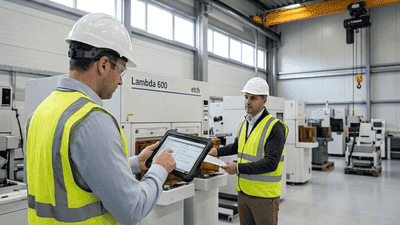
A machine’s previous operating environment matters. Process chemistry, maintenance practices, modifications, storage conditions, and periods of inactivity can influence its suitability for reuse.
Documentation helps establish what the buyer is acquiring. Configuration records, service history, component replacements, and known defects provide a basis for inspection and planning.
Contamination deserves particular attention. Cleaning and decontamination must be appropriate to the tool’s history and intended application. A system moving between different process environments may require more than ordinary cosmetic restoration.
From an engineering perspective, missing information creates uncertainty. From a commercial perspective, that uncertainty should affect the scope of inspection, contractual protections, and willingness to pay. A well-documented tool can be worth more than an apparently similar machine with an unclear history.
Front-End Integration Is a Process Question
In wafer fabrication, equipment must fit a coordinated process flow. A purchased tool may meet nominal specifications but still behave differently from the systems already in production.
Recipes, chamber configurations, measurement methods, and handling arrangements can influence the work needed to integrate it. The customer must determine whether the tool can reproduce acceptable results or whether the process needs adjustment.
This is where familiar platforms can offer an advantage. Existing engineering knowledge, compatible parts, and established maintenance practices may reduce deployment risk.
Nevertheless, familiarity is not proof of equivalence. Two machines bearing the same model designation can have different histories and configurations. The specific system must be evaluated rather than accepted solely because its product family is known.
Back-End Equipment Has Its Own Secondary-Market Logic
Assembly and test operations also purchase used equipment, but their evaluation criteria differ from those of a wafer fab.
A bonding system must suit the package and materials involved. A tester needs an appropriate hardware configuration, software environment, and supporting interface equipment. Handling systems must accommodate the intended devices safely and consistently.
For established package formats and repeat production, a qualified older platform may provide an economical expansion route. For newer architectures, its limitations may become more significant.
The buyer should therefore separate general equipment availability from application readiness. Back-end systems can appear mechanically straightforward while still requiring specialized tooling, programming, and validation before they support commercial production.
Advanced Packaging Raises the Limits of Reuse
Not every packaging opportunity is suitable for older equipment. Tighter alignment requirements, more demanding inspection, changing materials, or complex structures can exceed a legacy platform’s capabilities.
Upgrades may help in some cases, but their feasibility and economics need examination. Adding capabilities to an older machine can become less attractive than purchasing equipment designed for the intended application.
This creates a natural boundary for the secondary market. Used tools are strongest where the process requirement is established and the available platform can meet it without excessive modification.
That boundary is not a weakness. It is a reason to use the market selectively. A mixed strategy—new equipment for demanding steps and qualified refurbished systems elsewhere—can be more rational than insisting on either approach across an entire line.
Supportability Determines the Useful Life
A functioning tool can become difficult to operate if its controls, electronics, or specialized parts are no longer readily supported. Maintenance capability therefore deserves attention before acquisition.
Buyers should identify who can repair the system, which parts are stocked, and whether replacement components require additional validation. Training and documentation also matter, especially when the platform is unfamiliar to the receiving factory.
Independent refurbishment specialists can provide valuable support, but their capabilities should be verified for the actual model and configuration involved.
From the supplier’s perspective, long-term service can strengthen the business relationship. From the customer’s perspective, it reduces the risk that an inexpensive machine becomes stranded after an otherwise manageable failure.
OEM and Independent Channels Offer Different Trade-Offs
Equipment sourced through the original manufacturer can offer access to platform expertise and established service arrangements, depending on the program and product.
Independent suppliers may offer broader sourcing flexibility, experience with discontinued platforms, or application-specific refurbishment. Their strengths vary, making technical diligence essential.
The right comparison is not simply the supplier’s label. It is the scope of work, demonstrated competence, acceptance criteria, warranty, and continuing support.
A buyer should also establish software rights and access to necessary documentation. Physical ownership of a machine does not automatically settle every question about using, modifying, or supporting its control environment.
Export Controls Still Apply to Used Equipment
Secondhand status does not remove the need to examine applicable export, reexport, and end-use requirements. A previously operated tool can still be subject to restrictions relevant to the proposed transaction.
Ownership history, destination, customer identity, technical characteristics, and intended use can therefore matter alongside mechanical condition.
For buyers, regulatory review should occur before assuming that an internationally listed system is deliverable. For sellers, it should be integrated into the transaction rather than postponed until shipment.
The secondary market is an alternative purchasing channel, not an exemption from legal obligations. Transaction-specific questions require qualified review under the rules applicable at the time.
A Buying Framework That Protects the Economics
A disciplined purchase process turns an uncertain asset into a defined manufacturing investment.
- Specify the process requirement and required configuration before sourcing.
- Verify ownership, operating history, documentation, and contamination status.
- Inspect the actual system rather than relying only on model specifications.
- Define refurbishment work and measurable acceptance criteria.
- Confirm facility compatibility, software access, and support arrangements.
- Budget the complete path from removal to qualified production.
- Review regulatory requirements before committing to delivery assumptions.
These steps do not eliminate risk, but they make it visible. They also help distinguish a genuine capacity opportunity from a low-priced tool whose deployment costs are poorly understood.
Market Growth Does Not Guarantee Better Bargains
Demand for proven legacy platforms can strengthen prices for specific models, especially when customers value compatibility with existing lines.
At the same time, equipment availability depends on what other manufacturers retire or release. The market does not necessarily supply the exact mix that buyers need.
For analysts, this means broad growth forecasts are less useful than product-level evidence. Price trends, inventory quality, refurbishment capacity, and support availability provide a clearer picture.
A strong secondary market can improve industrial flexibility without making every expansion inexpensive. Its value comes from matching usable assets with appropriate applications, not from assuming that older equipment is always abundant or cheap.
The Alternative Path Is a Selective One
Used equipment offers mature-node manufacturers a practical way to add capacity, replace difficult assets, and preserve familiar production platforms. Its role extends across front-end processing and selected back-end applications.
The successful strategy is not bargain hunting. It is disciplined matching of process needs, tool condition, qualification effort, and lifecycle support.
When those elements align, a refurbished system can become dependable productive capacity. When they do not, the discount can disappear quickly. The alternative capacity path works best when manufacturers buy the production outcome—not merely the machine.