
CMP Consumables Business Model: The Recurring Revenue Advantage
Chemical mechanical planarization has an attractive commercial characteristic: the equipment is purchased periodically, but the materials that make it productive are consumed repeatedly. Every qualified polishing process creates continuing demand for slurry, pads, conditioners, cleaning chemistry, and other supporting products.
That recurring demand is the foundation of the CMP consumables business model. Recycling introduces a second possibility: suppliers and service providers can earn revenue by preserving, recovering, or extending material value rather than relying exclusively on fresh product sales.
The opportunity requires careful definition. “Recycling revenue” does not mean that used slurry can routinely return to every advanced process or that worn pads are universally reusable. It describes a potentially broader service model built around recovery, qualified refurbishment, waste reduction, and lifecycle management. The advantage exists only when those activities improve customer economics without compromising manufacturing performance.
Why CMP Creates Recurring Demand
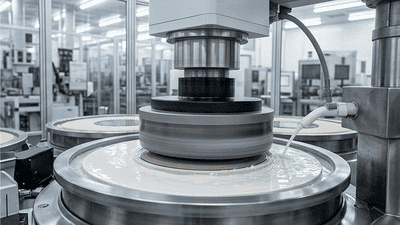
CMP combines chemical action and mechanical polishing to remove material and create surfaces suitable for subsequent manufacturing steps. Its performance depends on the interaction among the wafer, slurry, pad, conditioner, equipment settings, and post-polish cleaning.
Unlike the polishing tool itself, many supporting materials are consumed or replaced during normal operation. Their commercial demand is therefore linked to production activity, process requirements, and replacement intervals.
For a supplier, this can provide a continuing relationship with an installed equipment base. For a fab, it creates an ongoing cost that must be controlled alongside yield and equipment productivity.
The relationship is not purely transactional. Customers qualify combinations of materials and process conditions. A supplier that helps maintain stable performance can become integrated into the manufacturing operation rather than simply competing on the price of each delivery.
Recycling Is Not One Activity
The term covers several different routes, with different technical requirements and revenue potential.
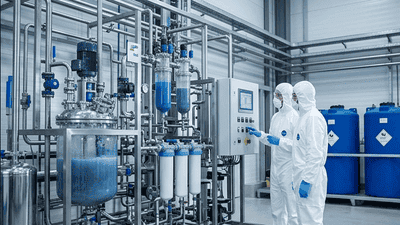
- Water recovery separates reusable water from a process waste stream, subject to treatment and intended-use requirements.
- Material recovery extracts constituents for another application rather than returning them to semiconductor polishing.
- Pad refurbishment attempts to restore useful characteristics for an approved polishing application.
- Slurry reclamation seeks to recover or refresh material for reuse in a defined process.
- Consumption reduction extends useful life or improves utilization without necessarily recycling anything.
These routes should remain distinct. Water recovered from wastewater is not qualified polishing slurry. A recovered abrasive used outside semiconductor manufacturing does not establish that it can safely return to a wafer process.
The commercial analysis must identify exactly what is recovered, where it goes, and who pays for the resulting service or product.
Why Closed-Loop Slurry Reuse Is Difficult
Fresh slurry is a controlled formulation. During use, its composition and condition can change as it encounters the wafer, polishing surface, process chemistry, and removed material.
Recovering that mixture is therefore more demanding than collecting an unused liquid. Filtration may remove some unwanted material, but it does not automatically restore the formulation’s original chemical and physical behavior.
A published sustainability review distinguished water recovery and alternative uses for recovered material from returning spent slurry to semiconductor processes. It emphasized the reliability challenges associated with slurry reuse. That limitation remains an essential starting point, not proof that every future reclamation approach is impossible.
For a process engineer, the concern is straightforward: a small material saving can become uneconomic if it introduces scratches, contamination, unstable removal, or additional production variability.
Pad Refurbishment Offers a More Tangible Example
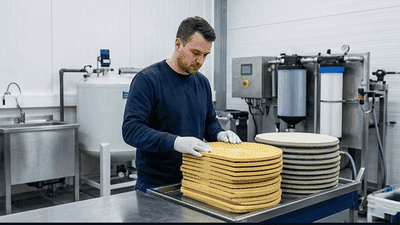
Some recycling opportunities involve a solid consumable rather than a complex liquid mixture. A polishing pad can be evaluated for whether a restoration process produces acceptable characteristics for a particular application.
SK hynix described a pad-recycling development in which restored surface patterns produced performance comparable to new pads in its evaluated conditions. Its announced introduction plan concerned a specific Touch CMP application. That is evidence of an application-specific route, not a universal claim that all CMP pads can be repeatedly restored.
The business implication is nevertheless meaningful. A qualified restoration method can create a service around collection, inspection, reworking, verification, and return.
For customers, the value depends on dependable results. For providers, the opportunity depends on how much usable material can be recovered consistently and at a cost that supports both savings and a sustainable margin.
Routine Conditioning Is Not the Same as Recycling
CMP already includes activities that preserve operating performance. Pad conditioning maintains surface characteristics during use, but it should not automatically be counted as a separate recycling business.
Similarly, extending replacement intervals through improved materials or operating practices is different from recovering an item after it has been removed from service.
These distinctions matter when estimating market size. Combining ordinary consumable maintenance, refurbishment, water treatment, and slurry reclamation into one category can exaggerate the addressable revenue.
A credible business model states where the lifecycle intervention occurs and what additional value it creates. The provider should be paid for a measurable improvement, not merely for relabeling an existing process as circular.
The Revenue Advantage Can Take Several Forms

Recycling-related revenue can emerge through service fees, equipment sales, replacement filters, analytical testing, qualified refurbished products, or ongoing management contracts.
A provider might collect and restore pads under a defined specification. Another might supply treatment equipment and recurring maintenance. A third might manage waste streams while recovering material for a separate industrial customer.
These are possible commercial structures, not evidence that every CMP supplier currently operates them. Their economics depend on scale, logistics, technical capability, and the destination of the recovered material.
From an investor’s perspective, recurring revenue is attractive only when it produces acceptable returns. A predictable service contract can still be unattractive if inspection, transport, rejects, and liability consume most of the income.
The Incumbent Supplier Faces a Cannibalization Question
A supplier selling new consumables may initially view longer life or reuse as a threat. If customers replace fewer items, fresh-product revenue can decline.
However, refusing to participate does not guarantee that demand remains unchanged. Customers may develop their own recovery methods or work with another provider.
The strategic alternative is to capture part of the efficiency benefit through new services, differentiated products, or a broader lifecycle relationship. The supplier moves from selling replacement volume toward supporting a manufacturing outcome.
That transition is not automatically accretive. Management needs to compare the contribution from new services with the revenue displaced. The strongest model creates enough customer value to support both lower overall cost and a profitable supplier relationship.
Customer Economics Must Use the Right Denominator
A recycling program should not be judged solely by the percentage of material recovered. High recovery can be commercially meaningless if the output has limited value or requires expensive processing.
For a fab, the relevant denominator is acceptable manufacturing output. Savings must be assessed after treatment costs, inspection, handling, qualification, and any changes in productivity.
A useful calculation compares the baseline cost with the complete cost of the recovery route. It should include the consequences of rejected material and the need for backup fresh supply.
The objective is not to maximize reuse at any price. It is to reduce total cost or environmental burden while maintaining the required process performance. Those outcomes can align, but they should be demonstrated separately.
Qualification Protects the Process—and the Business
A recovered or refurbished material needs an approval path appropriate to its intended use. That can involve specification development, analytical verification, controlled trials, and continuing monitoring.
Application boundaries are important. Material qualified for one polishing step should not be assumed suitable for another with different requirements.
Traceability also matters. Providers need to know the material’s origin, processing history, recovery treatment, and release status. Mixing poorly characterized inputs can make repeatability difficult to establish.
From the service provider’s perspective, qualification is not merely a sales obstacle. It defines what can be delivered reliably and helps control liability. A narrow, well-supported claim is commercially stronger than a broad promise that cannot survive production evaluation.
Front-End and Packaging Opportunities Differ
CMP is associated strongly with wafer fabrication, but relevant applications also extend into selected advanced packaging processes. Commercial slurry portfolios include products for dielectric, metal, through-silicon-via, and advanced packaging applications.
Those categories do not create one universal recycling opportunity. Different materials, contamination concerns, and process objectives can alter the feasibility of recovery.
A method demonstrated in one application may provide a starting point for further development, but transfer requires evidence. Conversely, an application with a manageable restoration route could become an attractive initial market even if broader reuse remains difficult.
The sensible approach is selective expansion: establish performance in a defined process, build repeatable operations, and then investigate adjacent applications. A business grows more credibly through qualified use cases than through a blanket sustainability narrative.
Logistics Can Determine Whether the Model Works
Recovery requires material to move through a controlled loop. Collection, separation, storage, transport, and return all add cost and create opportunities for contamination or damage.
Local processing can improve responsiveness and simplify logistics, particularly when the material is bulky or has modest recoverable value. However, a regional operation still needs sufficient volume to justify its equipment and quality systems.
For a provider, customer density can therefore matter as much as technical capability. A successful laboratory process may become commercially difficult when collection sites are widely dispersed.
For a customer, the system must remain convenient enough to operate consistently. A recovery program that requires excessive manual coordination can lose value even when its technical results are acceptable.
Environmental Claims Need a Complete Boundary
Less waste does not automatically establish a lower overall environmental impact. Recovery consumes energy, chemicals, water, and transport resources.
An honest assessment compares the complete recovery route with the relevant baseline, including avoided production and disposal where appropriate. It should also distinguish reuse, recycling into another application, and treatment that simply enables safer disposal.
These distinctions strengthen rather than weaken the business case. Customers can make better decisions when benefits are specific and measurable.
For suppliers, credible reporting can support long-term relationships. Overstated claims create reputational risk and make it harder to demonstrate the genuine value of a well-designed program.
What Investors Should Monitor
The recycling revenue advantage becomes credible when technical success translates into repeat business and sustainable economics.
- Look for clearly defined applications and customer qualification.
- Track accepted recovery yield rather than collected volume alone.
- Separate service revenue from displaced fresh-consumable sales.
- Examine transport, inspection, processing, and reject costs.
- Assess customer concentration and the need for dedicated facilities.
- Distinguish demonstrated deployment from research, patents, and planned programs.
Market relevance is not enough. The provider must show that it can preserve performance, operate the recovery loop reliably, and retain an economically meaningful share of the value created.
From Replacement Volume to Lifecycle Value
CMP consumables retain an attractive recurring-demand foundation. Recycling and refurbishment can broaden that model, but they do not erase the importance of qualified fresh materials.
The strongest opportunity is selective: recover water where appropriate, restore components where proven, improve utilization, and develop reclamation only where process performance supports it.
The lasting revenue advantage belongs to businesses that make those activities dependable and measurable. In CMP, circularity becomes commercially valuable when it preserves what customers are ultimately buying—consistent, acceptable production.