
Bonder and Molder Demand from CoWoS and HBM: The Back-End Equipment Surge
The semiconductor investment cycle is no longer defined only by how many wafers a fab can process. For AI systems, manufacturing capacity also depends on how effectively advanced dies and memory stacks can be assembled into working packages. A wafer full of functioning chips creates limited commercial value if bonding, encapsulation, inspection, or testing cannot keep pace.
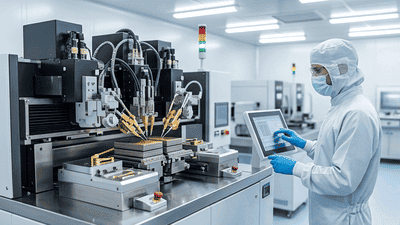
That shift is bringing bonders and molders closer to the center of equipment spending. CoWoS packaging and high-bandwidth memory create demand for precise placement, reliable interconnections, controlled thermal processing, and protection of increasingly delicate structures.
The opportunity is substantial, but it is not uniform. Different process routes require different machines, and higher package output does not translate automatically into an identical increase in every equipment category. The key theme is integration: back-end tools are becoming essential to the performance and scalability of the complete AI manufacturing chain.
CoWoS and HBM Are Connected, but They Are Not the Same Process
CoWoS, short for Chip-on-Wafer-on-Substrate, is a packaging technology family associated with TSMC. It enables integration of logic and other components through an intermediate structure and onto a package substrate. HBM is a stacked memory technology that can be incorporated alongside a processor in such advanced packages.
The two create linked manufacturing requirements, but their equipment purchases arise at different stages. Producing an HBM stack involves assembling memory dies. Integrating that stack with logic into a larger package creates additional placement, bonding, and assembly requirements.
For an equipment analyst, combining these activities into one “AI packaging” category can conceal important differences. A memory manufacturer and a packaging provider may buy different systems even though both support the same final computing product.
The useful starting point is therefore the process map: which operation is expanding, who performs it, and what equipment is required?
Why Bonding Has Become a Capacity Question
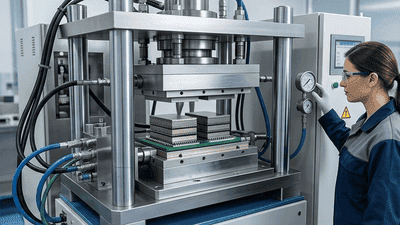
Bonding is not simply the act of attaching one component to another. The process must create the intended mechanical and electrical relationship while controlling alignment, temperature, force, and material behavior.
As integration becomes more demanding, a bond’s quality can determine whether several valuable components operate together successfully. Errors become expensive because they can compromise a structure containing substantial accumulated manufacturing value.
From a factory manager’s perspective, the challenge is to achieve that quality at production speed. A process that works reliably in a limited trial may still need improvements before it supports commercial volumes.
This is where equipment demand emerges. Customers need machines that combine precision with repeatability and throughput. Capacity is measured in acceptable assemblies produced, not merely in how many placements a tool can attempt.
Thermocompression Bonding Addresses Specific Integration Problems
Thermocompression bonding uses controlled heat and force to establish connections between components. It serves applications across heterogeneous integration, including chip-on-wafer, chip-on-substrate, and memory-related assembly.
A concrete indication of demand came in December 2025, when ASMPT announced additional orders for fifteen chip-to-substrate thermocompression bonding tools from a major outsourced assembly and test partner of a leading foundry. The company connected the orders to AI computing chips and larger compound dies. That announcement demonstrates a specific customer commitment, not universal demand across every bonding process.
The broader implication is that advanced package growth can generate equipment purchases outside the memory-stacking operation itself.
For suppliers, winning a qualified role in a particular application can be valuable. Customers tend to evaluate production equipment against the process they intend to run, making application success more informative than broad claims of technological leadership.
HBM Stacking Increases Assembly Complexity
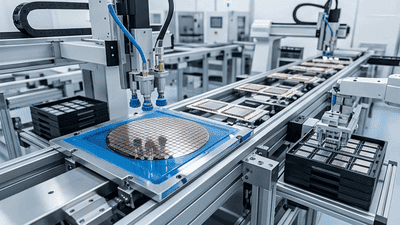
HBM combines multiple memory dies into a stack. As stack configurations evolve, manufacturers must manage repeated handling and interconnection steps while preserving the intended structure.
More layers can create additional assembly work, but the equipment implication depends on the process route. It would be too simplistic to assume that a percentage increase in layers produces the same percentage increase in bonder purchases.
Tool productivity, parallel processing, existing utilization, and changes in the manufacturing sequence all influence incremental capacity needs.
For an investor, the distinction is important. HBM bit-demand growth, stack shipments, bonding operations, and equipment orders are related measures, but they are not interchangeable. A credible forecast needs to explain how one becomes the next.
Mass Reflow and Thermocompression Follow Different Routes
HBM manufacturing does not rely on one universal assembly flow. Different approaches manage bonding and underfill through different combinations of materials and processing.
SK hynix’s mass-reflow molded-underfill approach illustrates one route. It distinguishes collective solder bonding from the subsequent use of molded underfill to fill gaps and support the stacked structure. Other approaches combine thermocompression with materials such as non-conductive film.
These differences matter because they change which equipment performs the critical work. A process emphasizing one bonding method can create a different purchasing mix from a process using another.
Neither route should be reduced to a simple label declaring one supplier the inevitable winner. Manufacturers evaluate performance, yield, thermal behavior, productivity, and integration with their existing operations.
Molding Is More Than Protective Packaging

Molding materials provide protection, but advanced applications require more than covering a device with resin. The process must manage flow, curing, gaps, and the mechanical behavior of the resulting assembly.
For delicate stacks and larger packages, unwanted voids or deformation can affect usability. The equipment and material therefore need to be developed as a coordinated process.
Compression molding is one relevant technology. TOWA’s portfolio includes systems for wafers and panels and configurations compatible with mold-underfill applications. That demonstrates a practical equipment route into advanced packaging rather than a generic association with AI demand.
From a process engineer’s perspective, the objective is consistent encapsulation without introducing new defects. From a supplier’s perspective, success depends on tooling, process control, materials compatibility, and production support.
Bonders and Molders Capture Different Parts of the Opportunity
A bonder primarily addresses placement and connection. A molder addresses encapsulation or related filling and protection requirements. Their demand can grow together, but not necessarily at the same rate.
A customer may add bonders because an existing process is throughput-limited while using spare capacity in molding. Another may expand molding capacity because a new structure requires a different processing arrangement.
Equipment productivity also changes the relationship. A more capable tool can support additional output without a proportional increase in installed units.
For analysts, this means the back-end surge should be decomposed by process step. The most important question is not whether advanced packaging is growing, but where that growth creates a capacity constraint that customers are willing to resolve through new equipment.
Qualification Creates Valuable—but Conditional—Supplier Positions
Advanced assembly equipment must demonstrate that it performs the intended process repeatedly. Customers evaluate alignment, bond quality, material handling, thermal behavior, and production consistency.
Once a tool becomes part of a qualified manufacturing flow, it can gain a strong position in subsequent expansion. Reusing an established process can reduce the work involved in adding capacity.
However, qualification is not permanent protection against competition. A new package architecture, changing pitch, different materials, or revised throughput target can reopen equipment selection.
From an investor’s perspective, a qualified application is a meaningful advantage, but it should be examined alongside the customer’s roadmap. The value lies in continuing relevance, not simply in an initial designation.
Materials and Equipment Must Develop Together
Bonders and molders operate through interactions with solders, films, underfill compounds, and encapsulants. A machine’s performance cannot always be separated from the materials used with it.
Changes in material flow, curing behavior, contamination control, or thermal response can alter the process window. This makes collaboration among equipment suppliers, material companies, and device manufacturers especially important.
For a customer, the best solution is a usable process combination rather than an impressive standalone tool. For an equipment company, application expertise can help differentiate the offering.
This also explains why specifications alone provide an incomplete competitive comparison. The decisive advantage may be how reliably a platform operates with the customer’s chosen materials and package structure.
Inspection and Test Become Part of the Capacity Balance
Additional bonding and molding output must be supported by inspection and testing. Otherwise, customers can move the bottleneck rather than eliminate it.
Inspection helps identify assembly problems and process variation. Test determines whether the resulting devices meet electrical requirements. Both affect how much nominal assembly capacity becomes acceptable output.
From a production-planning perspective, the line needs balance. Installing more bonders does not guarantee more shipments if downstream equipment or engineering review cannot keep pace.
The back-end investment opportunity therefore extends beyond the headline machines. Handling, inspection, metrology, testing, and supporting infrastructure may all need expansion, depending on the process and existing capacity.
The Front-End Connection Is Real, but Indirect
HBM and advanced logic begin with wafer fabrication. Their availability influences how much material can enter the assembly flow.
A packaging expansion cannot compensate for insufficient supply of qualified dies. Equally, additional front-end production can fail to create finished-device output if assembly capacity remains constrained.
This makes coordination across the chain essential. Memory producers, foundries, packaging providers, and their equipment suppliers need schedules that are mutually realistic.
For investors, capacity announcements deserve interpretation. Front-end wafer capacity, HBM stack capacity, and final package capacity are different measures. Comparing them requires a defined conversion basis rather than treating every reported unit as equivalent.
Orders, Deliveries, and Productive Capacity Are Separate Milestones
A strong equipment order is evidence of customer intent. It is not yet evidence that the system is producing acceptable packages.
Manufacturing, shipment, installation, process setup, and qualification each sit between purchase and useful output. Customer site readiness can influence that timeline as much as the supplier’s factory schedule.
For equipment companies, growth can therefore bring execution pressure. They need enough manufacturing capacity, critical components, application engineers, and field support to convert bookings into operating systems.
For customers, the practical target is the production ramp date. Securing a delivery slot matters, but it is only one part of preparing a working line.
How to Evaluate the Supplier Opportunity
Equipment companies participate through different portfolios and customer relationships. Bonding specialists, broader assembly suppliers, and molding companies should not be valued as identical exposures.
A useful comparison examines:
- The applications in which each supplier has qualified equipment.
- The balance between memory stacking and larger-package assembly.
- Customer concentration and reliance on individual expansion programs.
- Tool productivity and the effect on incremental unit demand.
- The resources required for installation and application support.
- The conversion of orders into repeat deliveries and sustainable margins.
These factors help distinguish a durable equipment franchise from a temporary surge in purchases associated with one customer or technology transition.
What Could Moderate the Surge?
Customers can expand output through better utilization or improved yields, reducing the immediate need for new machines. Investment schedules can also shift if upstream supply or site preparation falls behind.
Technology changes introduce another uncertainty. Hybrid bonding and other developments may alter the long-term mix of assembly equipment, but their impact should be assessed through actual qualification and deployment rather than assumed to occur everywhere at once.
Competition can also intensify as the opportunity attracts additional suppliers. Technical differentiation must remain relevant to customer economics.
The strongest outlook therefore combines expanding demand with evidence of repeatable equipment performance and disciplined execution. AI spending creates the incentive; customer adoption determines the commercial result.
The Back End Becomes a Strategic Manufacturing Layer
CoWoS and HBM are changing the role of semiconductor assembly. Bonding and molding increasingly influence whether advanced dies can be integrated at the required quality and scale.
That creates a meaningful equipment opportunity, but one that follows specific processes rather than a universal spending multiplier. Different architectures reward different capabilities.
The lasting winners will be suppliers whose tools help customers produce acceptable assemblies consistently and economically. In the back-end surge, precision attracts attention. Qualified productivity earns repeat orders.