
Thematic ETFs

Memory Weight in AI Compute Indices: The Underweight Correction
Artificial intelligence investment has created a new generation of thematic indexes designed to capture the companies benefiting from the expansion of computing infrastructure. These indexes often emphasize GPUs, accelerators, networking, cloud platforms, data centers, semiconductor equipment, and power infrastructure. Memory is usually present, but its representation can vary substantially. In some AI compute indexes, memory companies occupy a relatively small position compared with their economic importance to the underlying systems.

Custom HBM+CoWoS Portfolio: The DIY Index Construction
Thematic ETFs are convenient, but they're also blunt instruments. An AI infrastructure ETF might give you exposure to HBM (high-bandwidth memory) and CoPoS (co-packaged optics) leaders, but it'll also dump you into NVIDIA, Broadcom, and a dozen other names that dilute the pure play.

NAND vs. DRAM ETF Divergence: The Trading Strategy
Memory markets don't move in lockstep. NAND flash and DRAM—though both essential to AI infrastructure—operate on different supply-demand cycles, face distinct technological constraints, and respond to different end-market drivers. Yet most semiconductor ETFs treat memory as a monolithic bet, lumping NAND and DRAM producers together and forcing investors to take undifferentiated exposure.
DRAM ETF’s $10B Milestone: The Fastest Thematic Launch Ever
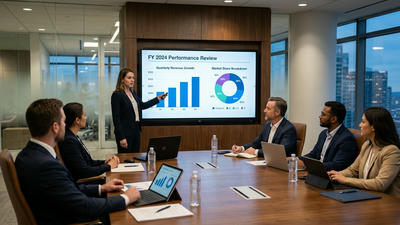
It took 18 months. That's all it took for the first pure-play DRAM ETF to cross $10 billion in assets under management. Launched in early 2025 with modest fanfare—a niche product for a niche audience—the DRAM ETF (ticker: DRAM, hypothetical for this discussion) has become the fastest-growing semiconductor-themed ETF in history. Faster than the AI ETF boom of 2023. Faster than the EV ETF surge of 2021. Faster than the cannabis ETF frenzy of 2018.
Equipment

China’s Equipment Localization Rate at 55%: The Mature Node Milestone
A semiconductor factory can become substantially more local without becoming entirely independent. Domestic etch chambers may operate alongside imported lithography systems. A locally assembled deposition tool may still rely on overseas components. An expanding packaging operation may use a different supplier mix from the wafer fab feeding it.
TSMC’s 20 Fabs Under Construction: The Equipment Order Pipeline
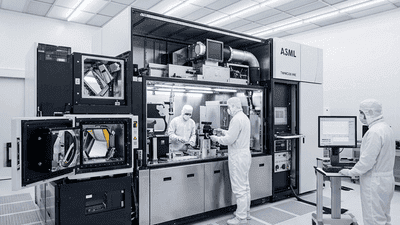
TSMC’s construction activity is becoming a defining signal for semiconductor equipment demand. When the world’s largest contract chipmaker develops multiple manufacturing projects simultaneously, the consequences extend beyond concrete, cleanrooms, and regional investment announcements. Each project creates requirements for process tools, subsystems, installation teams, and continuing service.
Advanced Ceramic Components in Etch and Deposition: The <10% Localization Gap
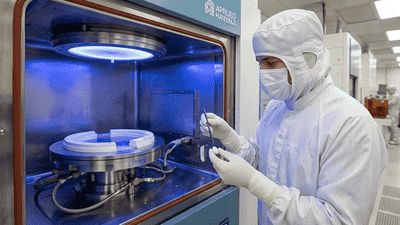
A semiconductor equipment company can assemble a competitive etch or deposition platform while remaining dependent on overseas suppliers for several of its most important internal components. The chamber carries a domestic brand, the controls are developed locally, and the process has passed customer evaluation. Yet the ceramic parts exposed to plasma, heat, and demanding chemistry may still come from a narrowly qualified supplier base.

ASML’s High-NA EUV Triple Partnership: Intel, Samsung, TSMC’s Production Plans
High-numerical-aperture extreme ultraviolet lithography is moving from an engineering development into a manufacturing roadmap shared by the industry’s largest chipmakers. The transition is not happening on one schedule, however, and the commercial implications depend on recognizing those differences.
Advanced Packaging

The Three-Headed Race in Advanced Packaging: TSMC, Intel, and ASE
For years, chip conversations revolved around transistor nodes and wafer fabs. Today, the more interesting battles are often happening a few millimeters above the silicon, in the world of advanced packaging. As AI, high‑performance computing, and high‑bandwidth memory redefine what a “chip” looks like, three names stand out in the packaging race: TSMC, Intel, and ASE. Each comes from a different starting point, with different strengths and weaknesses, and together they’re reshaping how heterogeneous integration will be done for the next decade.
Competitive Landscape of Advanced Packaging: The Coopetition Between OSATs and Foundries
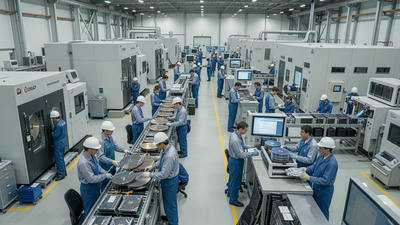
Advanced packaging has moved from the back end of semiconductor manufacturing to the center of the industry’s strategic map. As AI, high-performance computing, mobile systems, automotive electronics, and chiplets all push toward heterogeneous integration, one question has become unavoidable: who owns the packaging layer of the future, OSATs or foundries? The answer is not a clean winner-takes-all outcome. It is a complex and evolving contest of overlap, specialization, and cooperation. In other words, it is cooptition.
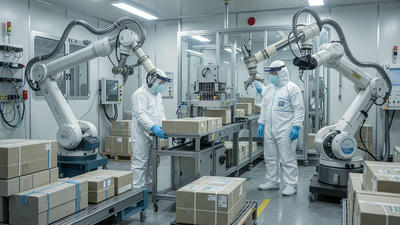
New Standards for Cleanroom Grades and Environmental Requirements in Advanced Packaging
Advanced packaging has changed the rules of semiconductor manufacturing, and cleanroom standards are changing with it. What used to be a largely front-end concern is now a packaging concern too, because heterogeneous integration depends on much more than just transistor quality. It depends on the cleanliness of bonding surfaces, the stability of thin wafers, the behavior of mold compounds, the integrity of fine-pitch interconnects, and the control of particles, humidity, and temperature throughout assembly. In short, the environment has become part of the design.
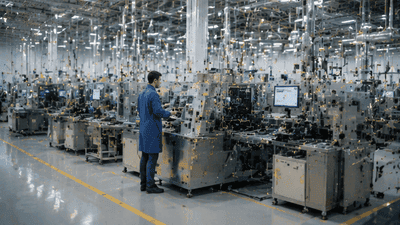
ASE and Amkor’s 2026 CapEx Priorities – Advanced Packaging Focus
If 2025 was the year the market finally accepted that advanced packaging was no longer a niche, 2026 is the year ASE and Amkor are acting like it. Both companies are putting capital behind the same big idea: advanced packaging and heterogeneous integration are now central growth engines, not side businesses. The scale of their spending plans says as much as any earnings call or roadmap slide. In a market reshaped by AI, HPC, chiplets, and HBM, CapEx has become a statement of strategy.
Materials

CMP Slurry Advances: Dinglong’s Cerium Oxide and TSV Polishing Wins
The semiconductor supply chain has a habit of hiding its most consequential dependencies behind its least glamorous materials. Advanced lithography attracts headlines. AI accelerators attract capital. Yet before a chip can become either a technological breakthrough or a commercial success, it needs a wafer—and most mainstream silicon wafer production depends on growing a single crystal inside a quartz crucible.

Wet Chemicals G5 Purity: The Domestic Qualification Breakthrough
A semiconductor fabrication plant can install advanced equipment, secure high-quality silicon wafers, and develop sophisticated process recipes, yet still lose performance to contamination carried by an ordinary-looking liquid. Sulfuric acid, hydrogen peroxide, hydrofluoric acid, and ammonia solutions appear unremarkable beside a lithography scanner. Inside the fab, however, their cleanliness can influence whether a carefully engineered surface survives the next manufacturing step.
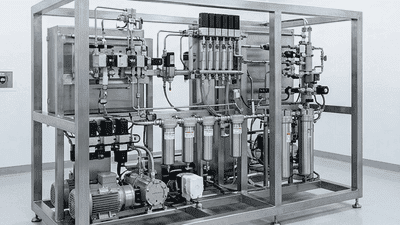
Precursor Demand in ALD and CVD: The Korean Supplier Dominance
A semiconductor’s most important materials are not always visible in the finished device. Some arrive at the factory inside specialized containers, enter a deposition chamber as vapor, and disappear into films only a few nanometers thick. These precursors help form the insulating layers, electrodes, barriers, and other structures that allow modern chips to operate.

Semiconductor Material Hidden Champions: The Small-Cap Opportunity Map
The semiconductor market rewards visible products: accelerators, memory, leading-edge manufacturing, and the equipment that makes them possible. Far less visible are the materials that allow those operations to run consistently. A wafer, photoresist formulation, specialty gas, or sputtering target may attract little attention until its quality or availability becomes a production problem.
Indices

CSI Semiconductor Index vs. STAR 50 Semi: The Style Divergence
Two portfolios can carry the semiconductor label and still express very different investment ideas. One may concentrate on the businesses that supply fabrication plants with equipment and materials. Another may lean toward chip designers, manufacturers, and technology companies whose valuations depend on expectations for future growth. When their returns diverge, the explanation often lies less in competing views of the semiconductor industry than in the exposures built into their construction.

Taiwan Semiconductor Index vs. SOX Correlation: The Decoupling Signal
Two semiconductor indices can follow the same global growth story and still tell different market stories. Taiwan’s semiconductor equities reflect the economics of manufacturing, design, packaging, and testing within a deeply connected production ecosystem. The Philadelphia Semiconductor Sector Index, better known as SOX, captures a different combination of semiconductor businesses through U.S.-listed securities. Their relationship offers a useful window into how investors price the chip cycle.
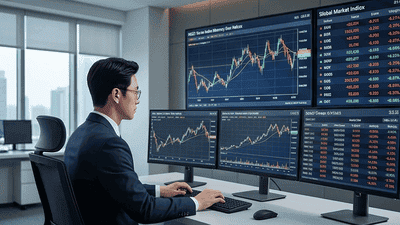
MSCI Korea Index Memory Duo Weight: Samsung and SK Hynix Dominance
A country index sounds like a broad invitation: buy one basket and participate in an entire economy. The MSCI Korea Index offers something more distinctive. Its exposure to South Korea’s equity market is heavily shaped by Samsung Electronics and SK Hynix, two companies whose fortunes connect Korean stocks to the global demand for memory chips. For investors, that creates a compelling opportunity and a question that deserves careful attention: how much diversification does a country label actually provide?
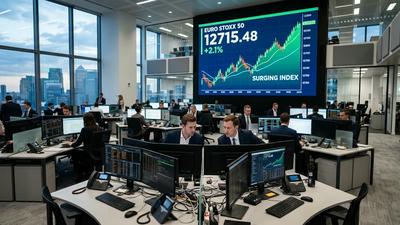
SOX Index at 12,715: The AI-Driven Re-Rating Trajectory
At 12,715, the semiconductor index invites a bigger question than whether chip stocks have climbed too far: what kind of industry is the market now pricing? The traditional answer centers on inventories, manufacturing utilization, and periodic recoveries in electronics demand. The emerging answer puts computing infrastructure, scarce technical capabilities, and the economics of artificial intelligence closer to the center.
ETFs

DRAM ETF’s 124% Post-Launch Surge: The Thematic ETF Phenomenon
A hypothetical 124% surge in a DRAM-focused ETF sounds extraordinary, but it also provides a useful framework for understanding one of the most powerful forces in semiconductor investing: the difference between a structural change in the memory cycle and the financial market's attempt to price that change in advance. A move of this magnitude would not simply represent enthusiasm for a group of memory manufacturers. It would suggest that investors were rapidly reassessing earnings power, supply discipline, pricing conditions, and the strategic importance of DRAM in artificial intelligence infrastructure.
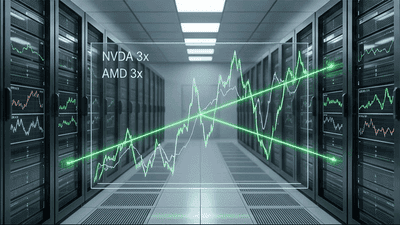
Leveraged Semi ETF Decay: The Path Dependency Analysis
Leveraged semiconductor ETFs are among the most aggressive instruments available to investors who want concentrated exposure to the chip cycle. By seeking two times or three times the daily performance of a semiconductor index, these products can magnify gains when momentum is strong and the underlying market moves persistently in one direction. The same structure, however, creates a less intuitive outcome when markets become volatile. Over periods longer than a single trading session, the return of a leveraged semiconductor ETF can differ substantially from the simple multiple many investors expect.

Semi ETF Fee War: The Lowest Expense Ratio Products
Semiconductor ETFs have become an increasingly popular way to gain exposure to chip designers, foundries, memory manufacturers, equipment suppliers, and the broader artificial intelligence hardware ecosystem. As competition among ETF providers has intensified, another contest has developed alongside the race for assets: the fee war. Fund managers are increasingly competing on expense ratios, creating a growing selection of semiconductor products that promise broad sector exposure at very low annual costs.

DRAM ETF Holdings: The 73% SK Hynix, Samsung, Micron Concentration
DRAM has moved from being a relatively specialized component of the semiconductor industry to one of the most important beneficiaries of the artificial intelligence infrastructure boom. The rapid expansion of AI servers, high-performance computing, data centers, and advanced accelerators has increased attention on memory capacity, bandwidth, and supply discipline. For investors who want exposure to this trend without selecting a single memory stock, semiconductor and memory-themed ETFs offer a convenient alternative.