
Ion Implanter Market: China’s Breakthrough Attempts in a Duopoly
Ion implantation is one of semiconductor manufacturing’s least visible but most consequential processes. The equipment does not attract the attention of extreme ultraviolet lithography, yet it helps determine the electrical properties that make a semiconductor device useful. A carefully controlled ion beam introduces selected species into a wafer, creating a material profile that must work with the rest of the manufacturing process.
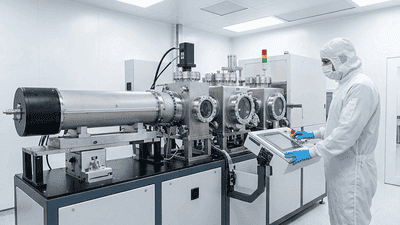
For established suppliers, this is a defensible equipment business built on engineering expertise, application knowledge, and customer trust. For Chinese equipment developers, it represents a difficult but strategically important localization target.
The competitive story is increasingly about qualification. Building an implanter is an achievement. Demonstrating that it can produce repeatable results in a customer’s manufacturing flow is a different milestone. Turning that performance into recurring orders is where a technical breakthrough becomes a commercial challenge to incumbents.
The Duopoly Description Needs a Boundary
Applied Materials and Axcelis Technologies are the principal reference points in discussions of mainstream semiconductor ion implantation. Their established platforms and customer relationships explain why the market is frequently described as a duopoly.
However, that description is shorthand, not a claim that only two companies manufacture implantation equipment. Japanese and other specialist suppliers participate, and the competitive landscape varies by application. Chinese developers including Kingstone and Zhongkexin are also pursuing domestic opportunities. Exact market shares require a defined product scope and reporting period.
This distinction matters when evaluating a breakthrough. Winning a particular process step does not establish displacement across the entire implantation market. A challenger can make meaningful progress while remaining far from a complete portfolio.
The most useful analysis therefore starts with the application being addressed rather than a sweeping claim that the duopoly has already ended.
Three Main Equipment Categories, Different Challenges

Ion implantation is commonly divided into high-current, medium-current, and high-energy equipment. These categories reflect different operating requirements rather than a simple ranking from basic to advanced.
High-current applications emphasize delivering substantial implant doses efficiently. Medium-current systems serve a range of applications where control and flexibility are important. High-energy tools address requirements involving deeper implantation profiles.
The categories can overlap commercially, and actual suitability depends on the process. Ion species, energy, dose, angle, contamination control, and wafer handling all influence the equipment requirement.
For a Chinese supplier, this creates several possible entry points. Success in one category can establish engineering credibility, but it does not automatically demonstrate the ability to reproduce another category’s performance. Portfolio expansion requires additional development and qualification.
Why Implantation Is Difficult to Substitute
A customer does not buy an ion beam in isolation. It buys a predictable manufacturing result: the required species introduced at the intended dose and profile, consistently across wafers and production lots.
The tool must coordinate ion generation, selection, acceleration, beam transport, measurement, and wafer positioning. Variability in one part of that system can affect the result delivered to the wafer.
This makes implantation equipment more than a collection of independently acceptable components. The subsystems must operate together under conditions appropriate to the customer’s application.
From a process engineer’s perspective, a replacement tool needs to demonstrate equivalence where it matters. Similar catalog specifications are not enough. From a purchasing perspective, that requirement limits how quickly a lower-priced alternative can enter production.
China’s Opening Is Selective, Not Universal
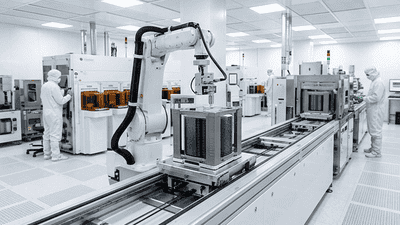
Chinese fabs have reasons to evaluate domestic implantation equipment: supply resilience, closer technical support, and the possibility of reducing dependence on overseas platforms.
Those incentives do not eliminate the need to protect manufacturing performance. A customer may qualify a local tool for a manageable application while retaining established equipment for more demanding steps.
That selective approach can be commercially significant. A supplier does not need to replace every tool in a fab to build a business. It needs an application where its equipment works reliably and where customers see a reason to expand adoption.
The likely early competitive pattern is therefore uneven. Domestic tools can gain ground in particular segments, customers, or recipes while incumbents remain strong elsewhere. The market changes application by application, not necessarily through one dramatic replacement event.
Mature Processes Can Provide a Practical Entry Point
Mature-node manufacturing offers an important route because it includes substantial demand for controlled doping across established device types. It also gives challengers opportunities to work on processes with clearer production histories.
However, “mature” should not be confused with technically easy. Analog, power, and other established devices can have demanding electrical and reliability requirements.
The advantage is that a supplier may be able to target a defined process with manageable qualification boundaries. It can learn from production feedback without claiming immediate readiness for every leading-edge application.
For customers, this creates a gradual substitution path. For suppliers, it creates a foundation for improving uptime, service capability, and process knowledge. A successful mature-process deployment can be strategically valuable even when it does not make a leading-edge headline.
Power Devices Create a Different Competitive Arena

Power semiconductor manufacturing should be evaluated separately from mainstream logic. Device structures, substrate materials, and operating objectives can change implantation requirements.
Silicon carbide adds another dimension. A platform suitable for a conventional silicon application should not be assumed equally suitable for silicon carbide production. The relevant thermal, handling, and process requirements need their own evaluation.
This creates opportunity and risk for challengers. A focused power-device application may offer a differentiated entry point, but it can also demand specialized engineering that is not transferable from a general-purpose demonstration.
For investors, a supplier’s “power exposure” needs to be unpacked. The meaningful questions concern which material, device process, and qualified equipment configuration are involved—not merely whether the customer participates in electric vehicles or energy infrastructure.
Breakthrough Claims Need a Commercial Ladder
The word “breakthrough” can describe several very different achievements. A laboratory beam demonstration, a completed machine, a customer trial, and sustained production adoption should not be treated as equivalent.
A useful progression moves from technical feasibility to equipment integration, then to customer evaluation, qualification, and repeat commercial deployment.
Each stage answers a different question. Can the system generate the required beam? Can it operate as a complete tool? Can it meet the customer’s process requirements? Can it do so consistently enough to support additional orders?
This framework protects against both excessive optimism and unfair dismissal. Early progress is real progress, but its commercial significance should be stated at the level the evidence supports.
Repeat Orders Are More Revealing Than First Orders
An initial order can reflect customer interest, a development partnership, or a controlled trial. A repeat order suggests that the relationship has moved further toward practical production value.
Even repeat orders need context. They may concern the same application at one facility rather than broad acceptance across multiple customers.
The strongest evidence is a combination of recurring purchases, expanding qualified recipes, stable operation, and adoption beyond the first site. Together, these indicate that a supplier is building a reproducible business rather than completing isolated projects.
For an analyst, this is where the competitive thesis becomes more concrete. Market share gains are credible when installed tools remain productive and customers choose to add more capacity.
Service Is Part of the Incumbent Advantage
Implantation equipment requires maintenance, troubleshooting, and replacement parts. Customers also depend on application support when process requirements evolve or unexpected behavior appears.
Established suppliers benefit from experience accumulated across installations. That knowledge helps them identify problems and support manufacturing without starting from first principles each time.
Chinese suppliers can compete through proximity and responsiveness, but those advantages need technical depth. A nearby engineer is valuable when the engineer has the tools, parts, and expertise required to resolve the issue.
Localization therefore needs a service system as well as a manufacturing system. Training, documentation, spare-parts planning, and field feedback become essential as the installed base grows.
The Subsystem Supply Chain Can Limit Progress
A domestically assembled implanter can still rely on internationally sourced components. Vacuum equipment, power systems, controls, motion hardware, and other specialized inputs may remain important dependencies.
That does not invalidate the achievement of local system development. It does mean that equipment localization and complete supply-chain independence are different objectives.
For suppliers, the practical task is to identify which dependencies threaten delivery or support and develop alternatives where appropriate. For customers, it is to understand whether critical parts remain obtainable throughout the tool’s intended life.
A credible resilience assessment follows the actual bill of materials. The final-system brand alone cannot establish how independently the platform can be built and maintained.
Export Restrictions Change Incentives, Not Engineering Requirements
Uncertainty surrounding access to overseas equipment can encourage customers to prioritize domestic qualification. It can also increase the strategic value of local service and spare-parts capability.
However, restricted availability does not make an unsuitable alternative suitable. The customer still needs acceptable performance and a workable production plan.
Domestic developers should also avoid assuming that local assembly eliminates every regulatory issue. International components, technology, and transactions can require separate review under applicable rules.
The most durable response is lawful capability building: develop the system, qualify its applications, strengthen support, and reduce critical dependencies. Regulatory pressure can accelerate the effort, but engineering execution determines the result.
Price Competition Comes After Usability
A domestic tool can offer an attractive purchase price, but customers evaluate more than the acquisition cost. Throughput, availability, consumable requirements, maintenance, and process stability all affect lifetime economics.
A less expensive machine can become costly if it requires frequent intervention or delivers fewer acceptable wafers. Conversely, a qualified alternative can improve purchasing leverage even before it captures a large installed share.
This creates a gradual competitive effect. As credible alternatives emerge, incumbents may face greater pressure to demonstrate service value, operating performance, and sustainable commercial terms.
For challengers, aggressive discounting is not necessarily the strongest strategy. They need sufficient resources to support customers and improve the platform. Winning an order without funding dependable operation can undermine the next sale.
Where Front-End Success Connects to Back-End Output
Ion implantation is principally a wafer-processing operation, not a conventional assembly or final-test function. Its direct equipment opportunity therefore sits mainly in the front end.
The back-end connection is indirect but important. Implantation contributes to device characteristics that subsequent manufacturing and testing must preserve and verify.
A packaging line cannot compensate for an unsuitable electrical profile created earlier. Equally, additional implantation capacity does not become finished-device output unless packaging and test capacity remain adequate.
This distinction keeps the investment discussion grounded. Growth in implantation equipment can support a broader manufacturing expansion, but it should not be translated mechanically into a particular back-end equipment order.
What Investors Should Watch Next
The indicators that matter most connect technical capability with sustainable production:
- Which current and energy categories have reached customer qualification?
- Which device applications are supported by repeatable operating results?
- Are orders expanding beyond initial development customers?
- How stable are uptime, service response, and spare-parts availability?
- Which critical subsystems remain dependent on external suppliers?
- Does revenue growth translate into acceptable margins and cash generation?
These questions provide a stronger basis for valuation than an unsupported market-share target or a single milestone announcement.
The Challenge Advances One Recipe at a Time
China’s ion implantation effort is a serious attempt to enter a concentrated equipment market. Its potential is substantial, but the path is narrower and more technical than the language of a duopoly battle suggests.
The decisive progress will come through qualified applications, dependable tools, and customers willing to place repeat orders. Incumbents retain important advantages, while domestic challengers have incentives to build capabilities where customers need credible alternatives.
The market will not change merely because another machine exists. It will change when that machine becomes a trusted part of production.