
Photomask Localization: Qingyi and Luwei’s Progress
China’s semiconductor localization story is often told through fabrication equipment, silicon wafers, photoresists, and specialty gases. Photomasks receive less attention, despite occupying a decisive position in manufacturing: they carry the patterns that lithography transfers onto a wafer. Without a suitable mask, a qualified process cannot turn a circuit design into repeatable production.
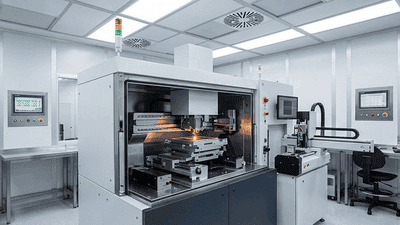
Qingyi Photomask and Luwei Optoelectronics illustrate how domestic suppliers are moving into more demanding semiconductor applications. Their progress is meaningful, but it requires careful interpretation. A development target is not a qualified product, a delivered sample is not recurring revenue, and supplying one mask layer is not equivalent to supplying a complete set.
The most useful lens is therefore qualification. By early October 2026, both companies had reported advances beyond their earlier commercial capabilities, but their milestones differed in product type, customer acceptance, and completeness of supply. Understanding those distinctions reveals more than a simple comparison of process-node labels.
Why Photomasks Matter Beyond Their Purchase Price
A photomask is a precision pattern carrier, typically built on a transparent substrate with patterned films. During lithography, the exposure system uses that pattern to define features in photoresist. Subsequent processing transfers those features into the device structure. Repeating this sequence across many layers creates the finished circuit.
Although masks represent only one part of manufacturing expenditure, their influence extends into yield, development schedules, and production continuity. A pattern defect or dimensional error can propagate across repeated exposures. Consequently, customers purchase more than a patterned plate: they purchase confidence that the plate meets the requirements of a particular lithography process.
Localization can improve communication, turnaround, and access to engineering support. These benefits matter during design revisions and process debugging, when delays can hold up a much larger development program. However, proximity is not a substitute for precision. A local supplier becomes strategically useful only when its products work reliably within the customer’s manufacturing window.
One Industry, Several Technical Markets
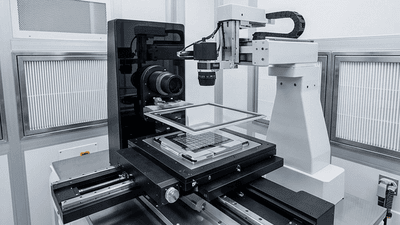
Photomasks serve flat-panel displays, integrated circuits, discrete devices, and packaging-related applications. These businesses share capabilities in pattern generation, substrate handling, cleaning, and inspection, but their requirements are not interchangeable.
Display masks can involve very large substrates and demanding dimensional uniformity. Semiconductor masks introduce different combinations of fine-pattern accuracy, defect sensitivity, optical behavior, and inspection requirements. Experience in one market provides a foundation for another, not an automatic qualification.
This distinction is especially important for Qingyi and Luwei because display-related activities form part of their industrial backgrounds. Expansion in display masks can strengthen manufacturing scale and customer relationships, while semiconductor development creates a separate technical and commercial challenge.
Revenue growth should therefore be examined by application wherever disclosures permit. A company can deliver strong consolidated results without having achieved an equivalent breakthrough in semiconductor masks. Conversely, a small semiconductor business may be making important technical progress before that progress materially changes total revenue.
Qingyi: From Established Products to More Demanding Masks
Qingyi’s earlier disclosed semiconductor position included scaled production at the 180nm process node and small-batch production at 150nm. Its development program extended toward more demanding phase-shift and optical-proximity-corrected masks, alongside planning for 28nm-related processes. These capabilities and ambitions belonged to different stages of commercialization, rather than one uniformly established product portfolio.
The company’s 2026 progress sharpened that distinction. Its first-half disclosures reported customer validation for 55nm binary masks. In a late-September announcement, Qingyi separately stated that its 55nm phase-shift mask product had received a purchase order, been delivered, and entered customer production-line qualification.
These are related but different achievements. Binary masks and phase-shift masks do not impose identical optical and manufacturing requirements. Passing validation for a binary product does not automatically qualify a phase-shift product at the same nominal node.
The September milestone is important because it moves the phase-shift product beyond an internal development claim into a customer evaluation workflow. Yet Qingyi explicitly cautioned that qualification timing and results remained uncertain, and that the timing of batch supply could not be established. The appropriate conclusion is tangible progress toward commercialization, not completed large-scale replacement of incumbent suppliers.
Why Phase-Shift Capability Changes the Discussion
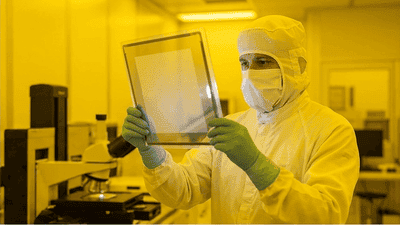
A binary mask primarily controls where light passes and where it is blocked. A phase-shift mask also manipulates the phase of transmitted light, using interference to improve image formation. That additional optical function can support more demanding lithography, but it also introduces tighter control requirements.
Manufacturing must manage the intended optical properties as well as the physical pattern. Inspection, repair, and process consistency become correspondingly important. A mask that appears dimensionally acceptable still needs to behave correctly in the exposure process.
Optical proximity correction adds another layer of complexity. The mask pattern may deliberately differ from the desired wafer pattern to compensate for imaging and process effects. Producing those corrected shapes accurately requires coordination between data preparation, writing, fabrication, and metrology.
For Qingyi, the significance of its newer products is therefore not simply a smaller number attached to a node. It is movement into a more demanding combination of optical performance, manufacturing control, and customer validation.
Luwei: Separating Individual Layers from Complete Sets
Luwei’s semiconductor expansion, including its Luxin project, presents a different milestone structure. Its disclosures reported customer validation and supply of complete mask sets at 90nm and above, alongside customer validation and supply of individual masks for 40nm and 28nm applications. Work on complete 40nm sets remained in customer sampling and validation.
At its September 2026 results briefing, Luwei maintained that distinction: individual 40nm and 28nm masks had passed customer validation and were being supplied, while validation of complete 40nm sets was progressing. Its planned extension toward 28nm–14nm complete sets belonged to the second-phase project rather than an already established full-set supply capability.
This separation matters because a chip uses multiple mask layers with different requirements. Some layers are less demanding than others. Success on an individual layer establishes a real capability, but it does not prove that a supplier can satisfy every requirement across the process flow.
Complete-set qualification broadens the challenge from isolated performance to comprehensive coverage and consistency. Luwei’s progress is consequently best understood as a ladder: established complete-set supply at less demanding nodes, qualified individual products at smaller nodes, and continuing work toward broader set-level acceptance.
Why the Two Companies Cannot Be Ranked by One Number

A comparison that places Qingyi’s 55nm milestone beside Luwei’s 28nm milestone and declares a winner overlooks essential differences. The figures describe different products, mask technologies, and qualification scopes.
Process-node labels identify the customer’s semiconductor process generation. They do not directly specify the smallest feature written on the mask, and they do not summarize every accuracy, defect, or optical requirement. Even within one node, mask layers can differ substantially in difficulty.
A more informative comparison asks four questions:
- What mask technology and application does the product address?
- Has it completed customer validation, or is validation still underway?
- Does the milestone cover individual layers or a complete set?
- Has supply become repeatable commercial business rather than initial delivery?
Viewed this way, both companies show progress without requiring exaggerated claims. Qingyi’s newer disclosures demonstrate movement into customer evaluation of a more demanding phase-shift product. Luwei’s disclosures demonstrate a broader distinction between complete-set capability and smaller-node individual-mask supply.
The Factory Behind the Milestone
Photomask localization depends on a coordinated manufacturing system. Pattern-writing equipment must place features accurately. Resist processing and etching must preserve the intended geometry. Cleaning must remove contamination without damaging delicate structures. Inspection must identify relevant defects, while repair must avoid creating new problems.
Metrology connects these steps by showing whether dimensional and positional requirements are being met. Data preparation connects the customer’s design to the physical writing process. Neither function can be treated as an afterthought.
This explains why a new production building or equipment installation is not equivalent to finished commercial capability. The line must operate as an integrated system, with stable recipes, trained engineers, effective defect control, and dependable turnaround.
Capacity announcements are most useful when accompanied by evidence of qualified output. The industrial question is not merely how many masks a facility could theoretically produce. It is how many acceptable masks it can deliver consistently for the applications customers actually need.
Localization Is Not the Same as Complete Independence
A domestically manufactured mask can still rely on imported blanks, writing systems, inspection equipment, repair tools, software, or other specialized inputs. Localization at the finished-product level does not automatically remove dependence throughout the upstream chain.
This is not a reason to dismiss domestic progress. Replacing an imported finished mask with a locally produced, qualified product can improve service and create valuable process expertise. It is, however, a reason to describe the achievement precisely.
Supply-chain resilience should be evaluated in layers: finished-mask availability, manufacturing equipment, critical materials, maintenance support, and replacement parts. Strengthening one layer reduces a particular vulnerability while leaving others to be addressed.
For customers, the practical objective is usually dependable manufacturing rather than an abstract claim of total independence. A supplier that can maintain qualified deliveries under changing conditions offers more value than one whose localization claim is broader than its operating reality.
Why Mature Nodes Offer a Substantial Opportunity
Photomask progress does not need to reach the most advanced logic processes to become commercially relevant. Mature-node semiconductor applications cover a wide range of analog, mixed-signal, power-management, connectivity, and control functions.
These markets can support sustained demand for new designs, process variants, and replacement masks. Their requirements vary, creating opportunities for suppliers to build capability incrementally rather than attempting the most difficult products immediately.
That incremental route also benefits customers. A foundry may qualify a new supplier first on selected layers or lower-risk applications, then expand its role as performance becomes established. Localization can therefore proceed through a portfolio of practical substitutions rather than a single dramatic switch.
The limitation is that market opportunity does not guarantee supplier profitability. Customers still evaluate price, delivery, quality, and engineering support. Domestic participation becomes durable when it offers competitive performance, not simply when customers agree to conduct trials.
Turning Technical Progress into Financial Results
For investors, the central challenge is identifying when a technical milestone begins to improve business economics. Qualification can require significant spending before meaningful revenue arrives. Advanced equipment and specialized facilities also create depreciation and fixed costs.
Early production may involve additional inspection, rework, engineering support, and lower utilization. A shift toward technically demanding products does not automatically raise margins if manufacturing yield or throughput remains weak.
The more revealing indicators include repeat orders, customer breadth, semiconductor revenue mix, accepted output, and utilization of the relevant production lines. Cash flow and capital expenditure provide another check on whether expansion is becoming self-supporting.
For Qingyi, follow-through on phase-shift qualification matters more than treating the initial purchase order as proof of scaled revenue. For Luwei, complete-set acceptance and the commercial depth of individual-mask supply matter more than repeating the smallest node in its development plans.
The Next Stage of Progress
Qingyi and Luwei are advancing photomask localization through different combinations of established products, narrower qualified capabilities, and more ambitious development programs. Their disclosed milestones show genuine movement, but also make clear where customer validation remains unfinished.
The next stage will be defined by repetition: repeated acceptable production, repeated customer orders, and broader application coverage. That is when an engineering achievement becomes a dependable supply-chain capability.
Photomasks may remain less visible than wafers, photoresists, or process gases, but they sit at the interface between design and manufacturing. Qingyi and Luwei’s progress matters because it expands domestic participation at that interface. Its ultimate value will depend not on the boldest node announcement, but on how consistently each company turns precise patterns into qualified commercial supply.