
ETF Flow vs. Korea Export Data: The Lead-Lag Relationship
Semiconductor ETFs have become an increasingly important way for investors to express views on the global chip cycle. Domestic funds, overseas semiconductor ETFs, and leveraged products all provide different forms of exposure, but their movements are often connected to the same underlying economic forces. Among the most useful external indicators for understanding that cycle is South Korea's export data, particularly semiconductor exports.
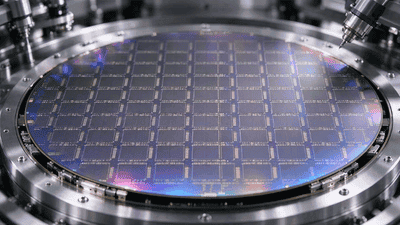
South Korea occupies a unique position in the global semiconductor supply chain. Its major companies are deeply involved in memory, advanced semiconductor manufacturing, and related technologies. As a result, changes in Korean semiconductor exports can provide information about global demand, pricing conditions, inventory trends, and the health of the technology cycle.
The interesting question is not simply whether semiconductor ETF flows and Korean exports move in the same direction. The more valuable question is which one tends to move first, how long the lead or lag may be, and under what market conditions the relationship becomes stronger or weaker.
ETF flows represent capital allocation decisions. Export data represents realized trade activity. Between those two points sits a complicated chain of expectations, orders, production, pricing, shipments, and financial-market positioning. Understanding that chain can help investors interpret whether ETF flows are anticipating a semiconductor recovery or merely responding to economic data that has already improved.
Why Korea's Export Data Matters to Semiconductor Investors
South Korea's export economy is highly sensitive to the semiconductor cycle. Memory products, including DRAM and NAND-related products, have historically played an important role in the country's export performance. When memory prices recover and global technology demand strengthens, semiconductor export values can improve significantly.
That makes Korean export data a useful real-world indicator of semiconductor demand. Unlike stock prices or ETF flows, exports represent actual goods moving through the global supply chain.
However, export data is backward-looking compared with financial markets. A semiconductor company may receive stronger orders today, increase production next month, ship products later, and eventually report those shipments in official trade statistics. Investors in semiconductor ETFs may react much earlier because markets price expectations rather than historical conditions.
This difference in timing is the foundation of the lead-lag relationship.
ETF Flows Represent Expectations

ETF flow data can provide a window into how investors are positioning around the semiconductor cycle. When investors create new shares in a semiconductor ETF, capital is effectively being directed toward the securities represented by that fund. Persistent inflows can therefore indicate increasing demand for semiconductor exposure.
But ETF flows are not pure economic indicators. They can be influenced by momentum, portfolio rebalancing, macroeconomic expectations, interest rates, currency movements, institutional allocation decisions, and short-term speculation.
A surge in semiconductor ETF inflows does not necessarily mean semiconductor exports will immediately improve. Investors may be anticipating an improvement several months ahead.
This is precisely why comparing ETF flows with Korean export data can be useful. The two indicators represent different stages of the investment cycle. ETF flows capture expectations and positioning, while exports provide evidence of realized trade activity.
The Basic Lead-Lag Framework
Imagine a simplified semiconductor cycle. Global chip inventories begin falling. Buyers become less cautious. Memory prices stabilize. Semiconductor companies receive better order visibility. Investors notice these changes and begin buying semiconductor ETFs.
At this stage, ETF inflows may increase before official export data improves.
Several months later, stronger orders translate into increased production and shipments. Korean semiconductor exports begin to recover. By then, the ETF may already have experienced a substantial portion of its initial rally.
This creates a potential sequence:
Inventory improvement → order expectations → ETF inflows → semiconductor stock performance → production recovery → export improvement → earnings confirmation.
The sequence is not always this clean, but it provides a useful conceptual framework.
From an investor's perspective, the key opportunity is understanding whether ETF flows are acting as an early signal or simply following already visible export improvements.
When ETF Flows May Lead Exports

ETF flows are most likely to lead export data when financial markets anticipate a cyclical turning point before it becomes visible in economic statistics.
Memory markets provide a good example. Suppose DRAM prices have been weak for an extended period, but manufacturers begin reducing production. Inventory levels fall, and buyers gradually return to the market. The improvement may initially be visible only through industry commentary, contract pricing, order activity, or company guidance.
Investors who believe the memory cycle is turning can begin accumulating semiconductor ETFs before export figures improve.
In this scenario, ETF inflows become a forward-looking indicator. Korean export data then provides confirmation that the anticipated recovery is reaching the physical supply chain.
This relationship can be particularly strong when investors are highly sensitive to semiconductor cycle turning points. Because chip companies are cyclical, investors often attempt to buy before earnings recover rather than after the recovery becomes obvious.
When Export Data Leads ETF Flows
The relationship can also operate in the opposite direction. If Korean semiconductor exports suddenly accelerate because of stronger global demand, investors who had previously ignored the sector may respond by increasing ETF allocations.
This can happen when the market has been skeptical about the semiconductor recovery. Strong export figures provide tangible evidence that demand is improving, encouraging investors to revisit their expectations.
In such an environment, export data may become the catalyst that triggers ETF inflows.
This distinction is important because the same ETF inflow can have different meanings. An inflow following several months of improving exports may represent confirmation or trend following. An inflow occurring before export improvement may represent anticipation.
For investors, the second situation can be more interesting because it provides information about expectations rather than simply reflecting known economic conditions.
The Role of Memory Prices

Memory pricing can help explain why the relationship is often complicated. Semiconductor export values are influenced not only by the number of units shipped but also by prices.
Suppose Korean memory exports increase in value because DRAM prices rise significantly while shipment volumes remain relatively stable. The export data may appear strong even though underlying unit demand has not increased dramatically.
Conversely, shipment volumes can increase while falling prices limit the improvement in export value.
ETF investors may react to these conditions differently. Equity markets often care about future profitability rather than simply shipment volumes. If higher memory prices are expected to improve margins, semiconductor stocks and ETFs can rise before the improvement appears fully in reported export figures.
This makes it useful to distinguish export growth driven by price from growth driven by volume.
Domestic Semiconductor ETFs and Korea
Domestic semiconductor ETFs can respond to Korean export data even when their portfolios contain few or no Korean companies. The reason is that South Korean exports provide information about the global semiconductor cycle.
If Korean semiconductor exports accelerate, investors may interpret the improvement as evidence that memory demand, server investment, or broader technology spending is strengthening. That can benefit semiconductor companies across regions.
Domestic ETF flows may therefore respond to Korean data through a sentiment transmission mechanism.
This is particularly relevant for ETFs focused on memory, AI infrastructure, semiconductor equipment, or the broader chip industry. A strong export reading can change expectations about future industry utilization, capital expenditure, and pricing power.
However, the sensitivity differs by ETF. A fund dominated by domestic equipment companies may respond differently from a memory-focused ETF because the earnings cycles of equipment suppliers and memory manufacturers are not perfectly synchronized.
Overseas ETFs Provide a More Direct Connection
Overseas semiconductor ETFs can have a more visible relationship with Korean export data because global semiconductor funds often contain major Asian memory and technology companies.
When Korean exports improve, the market may immediately reassess expectations for global memory demand. That can influence the valuation of Korean semiconductor companies directly and other global chip companies indirectly.
For global semiconductor investors, Korea can therefore function as a partial real-time indicator of the broader technology supply chain.
Yet investors should avoid treating Korean exports as a complete representation of global semiconductor demand. The industry has become increasingly diversified across computing, networking, automotive, industrial, consumer electronics, and AI infrastructure. A strong memory cycle does not automatically mean every semiconductor segment is equally healthy.
Leveraged ETFs Can Magnify the Reaction
Leveraged semiconductor ETFs add another layer to the relationship. If Korean export data surprises significantly to the upside, semiconductor indexes may respond quickly. Leveraged products can amplify that daily movement.
The same mechanism works in reverse. A disappointing export report can trigger a sharp semiconductor selloff, and leveraged ETFs can experience substantially larger daily declines.
For short-term traders, this responsiveness can be attractive. For longer-term investors, however, daily leverage and compounding make the relationship more complicated.
A leveraged ETF may react strongly to a single export report even if the long-term semiconductor cycle remains unchanged. Therefore, export data should be interpreted as one piece of information rather than as a standalone trigger for leveraged positioning.
Measuring the Lead-Lag Relationship
Investors do not need an elaborate statistical model to begin studying the relationship. A practical approach is to compare monthly or weekly ETF flows with Korean semiconductor export growth and then examine which series tends to turn first.
One useful method is to calculate rolling correlations at different time intervals. Compare ETF flows with current export growth, then with export growth one month later, two months later, and three months later.
If the strongest relationship consistently occurs when ETF flows are shifted forward by several months, that may suggest that ETF positioning tends to precede export improvement.
For example, if semiconductor ETF inflows in January are frequently followed by stronger Korean semiconductor exports in March or April, the two-month or three-month lag becomes worth monitoring.
This does not prove causation. Both variables may be responding to a third factor such as global memory prices, AI capital expenditure, or changes in interest rates.
Still, the timing relationship can be useful for investment research.
Why the Lead Can Change Over Time
The lead-lag relationship is not a permanent law. It can change depending on the stage of the semiconductor cycle.
During an early recovery, financial markets may move first because investors are anticipating better fundamentals. During a mature expansion, export data may become more influential because the recovery is already well understood and investors are looking for confirmation.
Near a cycle peak, the relationship can become even more complicated. Exports may remain strong while ETF flows begin weakening because investors anticipate future oversupply or margin pressure.
This creates an important scenario: strong current economic data combined with deteriorating ETF flows.
Such divergence can be more informative than simple agreement. It may suggest that investors are looking beyond the current data toward the next stage of the cycle.
Divergence Can Be the Most Valuable Signal
Imagine Korean semiconductor exports are growing rapidly, but semiconductor ETF inflows have stalled. One interpretation is that the market believes the positive export data is already priced in. Another is that investors are worried about future supply growth.
Now reverse the situation. ETF inflows are accelerating while Korean exports remain weak. This may indicate that investors are positioning for a recovery that has not yet appeared in official data.
The second scenario can be particularly important near cyclical bottoms. Financial markets frequently turn before economic statistics because stock prices reflect expectations about future earnings rather than current conditions.
However, divergence can also produce false signals. ETF inflows may reflect broad technology momentum rather than a specific semiconductor recovery. Similarly, weak exports may result from temporary pricing effects rather than fundamental deterioration.
Therefore, divergence should trigger investigation rather than immediate action.
Other Indicators Strengthen the Analysis
Korean export data and ETF flows become more useful when combined with additional semiconductor indicators.
Memory pricing can help determine whether export changes are driven by price or volume. Semiconductor company guidance can reveal whether management teams see sustainable demand improvement. Capital expenditure announcements can indicate whether manufacturers expect the cycle to remain strong. Inventory data can show whether supply-chain normalization is progressing.
ETF valuations are also important. Strong inflows after a major valuation expansion may carry a different meaning from similar inflows when semiconductor stocks are still trading near historical lows.
The objective is to build a chain of evidence rather than rely on a single indicator.
A Practical Monitoring Framework
For investors following semiconductor ETFs, a monthly framework can be useful. Start with ETF net flows and identify whether capital is entering or leaving semiconductor products. Next, review Korean semiconductor export growth and determine whether the latest movement is driven by volume, pricing, or both.
Then compare the two series. Are ETF flows leading exports, following exports, or diverging from them?
After that, examine memory prices, major semiconductor earnings expectations, and industry capital expenditure.
Finally, compare the signal across different ETF categories. A broad semiconductor ETF, a memory ETF, and a leveraged semiconductor product may respond differently to the same Korean export report.
This approach prevents investors from treating the semiconductor industry as a single homogeneous trade.
The Broader Investment Lesson
The relationship between ETF flows and Korean exports illustrates a larger principle of modern market analysis: financial markets and physical economies operate on different clocks.
ETF flows can change within hours because investors rapidly adjust expectations. Semiconductor exports change more slowly because products must be manufactured, shipped, and recorded. Between these two clocks lies the information that investors attempt to interpret.
Neither indicator is inherently superior. ETF flows provide information about expectations and positioning. Export data provides evidence about realized economic activity.
The most useful signal often emerges when the two begin moving together after a period of divergence.
Conclusion
The lead-lag relationship between semiconductor ETF flows and Korean export data provides an interesting framework for understanding the global chip cycle. ETF flows can sometimes anticipate improvements in semiconductor exports because investors position themselves before the physical supply chain fully responds. At other times, strong export data can provide the confirmation needed to bring additional capital into semiconductor ETFs.
Domestic semiconductor ETFs can respond indirectly to Korean data through changes in global industry expectations. Overseas funds may have a more direct connection through their exposure to Korean and Asian semiconductor companies. Leveraged products can magnify the market's immediate response, making them particularly sensitive to unexpected export surprises.
The most valuable information may come from divergence. Rising ETF inflows while exports remain weak can indicate expectations of an upcoming recovery. Strong exports combined with fading ETF flows can suggest that investors are already looking beyond current economic strength.
Ultimately, Korean semiconductor exports should not be treated as a simple buy-or-sell indicator for semiconductor ETFs. Their value comes from the timing relationship. By comparing capital flows with actual trade data, investors can gain a clearer view of whether the market is anticipating a semiconductor recovery, confirming one that is already underway, or quietly preparing for the next turn in the cycle.
In a sector as cyclical and expectation-driven as semiconductors, understanding which indicator moves first can be almost as important as understanding the direction itself.